
Untimely Stutters
The Publication of Alejandra Pizarnik and César Aira in the U.S.
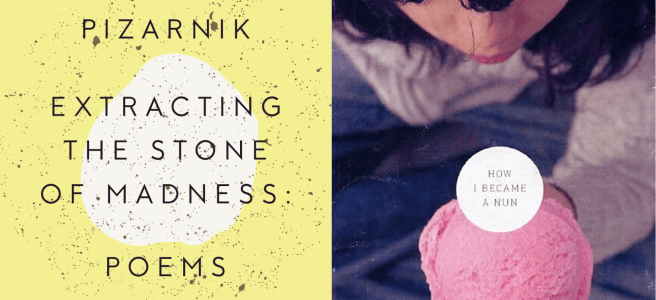
Alejandra Pizarnik. Extracting the Stone of Madness. Trans. Yvette Siegert. New Directions, 2016
César Aira. How I Became a Nun. Trans. Chirs Andrews. New York: New Directions, 2006.
Through a language of brushstrokes and pigments, the paint speaks. Even more than five centuries after its creation, Bosch’s panel remains capable of orientating our gazes to what appears the representation of a surgical procedure.
Given our historical space and the embellishments of the work itself, the painting can be difficult to understand—or, better yet, to “read.” The text becomes particularly formidable if we endeavor to analyze its meaning on a one-to-one basis—the strange clothing means this; the action depicted in an open field rather than indoors, where a surgery most likely would have taken place, symbolizes something else; the expressions and gestures of the figures involved, meanwhile, obviously indicate this . . . in some cases, representation is failure. It is the catastrophe that counts, what Dorothea Olkowski, in explicating Gilles Deleuze’s logic of sense, describes as the “clearing away of figurative givens, of narrative” (279).
The painting: Four human figures appear before the viewer. One of them is seated. This is the patient, secured in a large chair which seems to have been carved out of a single section of wood. The others stand, two men and a woman. The surgeon wears robes and a large conical tool on his head, something like a funnel, while his assistant or superior stands to the side, robed also, bearing a cistern and gesturing, as if admonishing the surgeon something of importance. Meanwhile, the woman stands further away, resting against a table. A book rests on her head. The bound volume is foregrounded against a cheerless straw and olive-green landscape, a smattering of trees and shrubs littering the otherwise austere and somehow moribund space. The artist’s strokes and dabs of oil paint at the imagined horizon hint a village. From this indistinct cluster of what we take to be homes and shops erupts a spire, a shape which also marks the distant hills.
Here, we need to pay attention, to look. The needle taps the sky, and one can feel in the curvature where the heavens and hills meet, in the tufts of gauzy cloud reminiscent of the hair wreathed around the head of the patient, that the sky is a transubstantiation of the madman’s skull. Likewise, the church spire is the trephine used by the surgeon. The background and the foreground are distorted reflections. The head of the madman—from which a flower is being extracted—is a microcosm of the Dutch countryside.
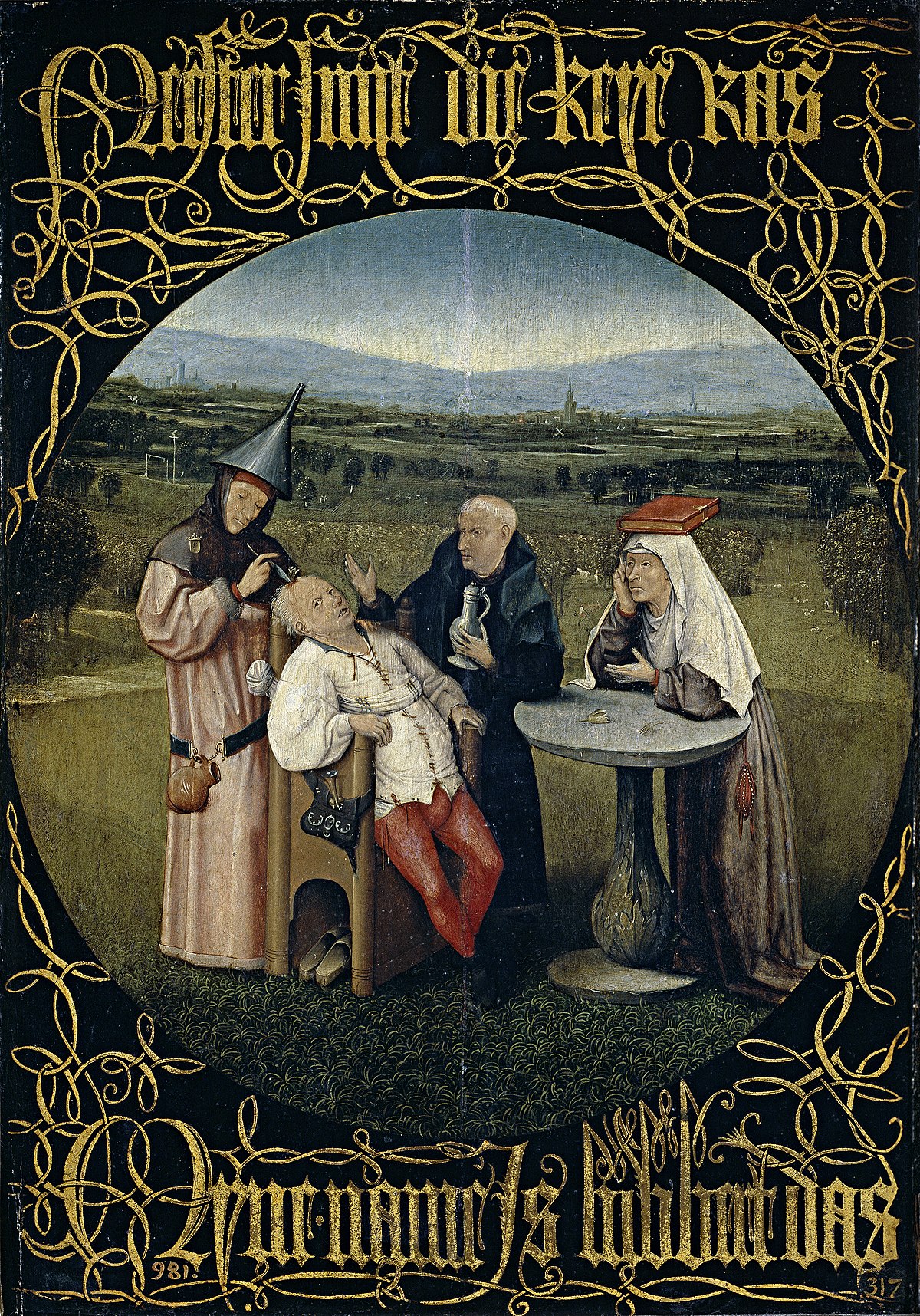
Hieronymus Bosch’s painting, titled alternately “Cutting the Stone,” “The Cure of Folly,” and “The Extraction of the Stone of Madness” was likely produced between 1501 and 1505, and portrays an elderly man undergoing trepanation. The painting, among others of Bosch’s, caught Michel Foucault’s attention, who would consider it in his monumental History of Madness, opining “Bosch’s famous doctor is far more insane than the patient he is attempting to cure, and his false knowledge does nothing more than reveal the worst excesses of a madness immediately apparent to all but himself” (25). Foucault’s commentary on the work adds a certain poignancy to his analysis of the evolution of Western discourse regarding mental illness and biopower more generally. In the Foucault example, then, addressing the Bosch painting reveals a degree of significance that extends beyond the milieu in which it was produced, as it becomes an important textual artifact in the genealogy of madness and wellness.
If we are to take this seriously—meaning the painting as a text that remains significant beyond its present home in the Museo Nacional del Prado (that is, beyond its being just a curious artifact which signifies the past and little else)—then we ought to feel obligated to explore to whom it speaks, and when it does. In a sense, the above becomes an issue of translation, a point which will be important later.
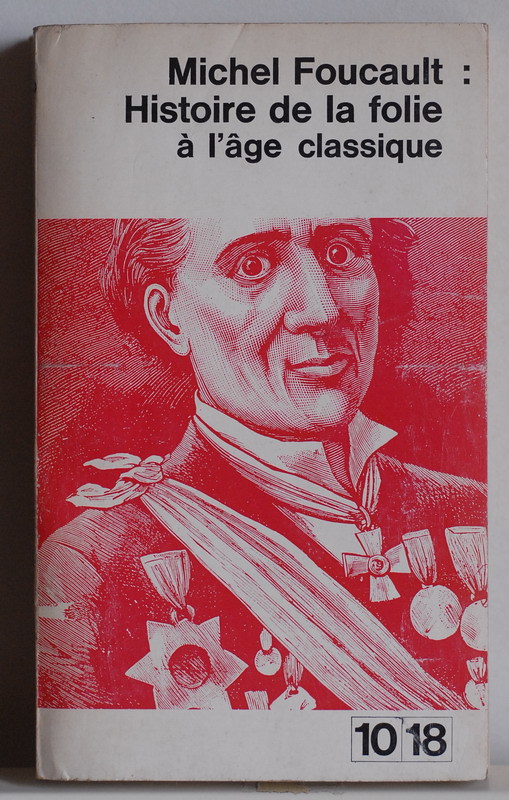 Foucault’s Folie et Déraison: Histoire de la folie à l’âge classique was published in France in 1961, and seven years later Alejandra Pizarnik’s poetry collection, inspired at least in part by Bosch’s painting, was published at the opposite end of the world, in Argentina. Extracción de la piedra locura (1968) appeared shortly before Pizarnik’s death by drug overdose at age 36. In the case of both Foucault’s and Pizarnik’s texts, it is useful to consider their relationships to Bosch’s painting conceptually—the painting as it affected them and their respective work, how it is, as Claire Colebrook describes Gilles Deleuze’s thought, “untimely.” Perhaps we shouldn’t consider the painting in terms of how well Pizarnik represents or reproduces the ideas and meanings that might be thought to be contained in its material parts, but, rather to “look at what . . . [it] does, or how it transforms the problems that in turn transform our thinking” (66). For Foucault, this would eventually result in thinking through insanity and sexuality; and, in Pizarnik’s case, it resulted in a minor literature, a corpus which is only recently being translated into English, and that operates by “inducing processes of becoming-other” (Bogue, 135),
***
 Alejandra Pizarnik was born in Avellaneda, Argentina in 1936, and her work has been enormously influential throughout Latin America. Her poetry has found strong proponents in luminaries including Octavio Paz, Roberto Bolaño, and César Aira. Turning to the latter, it is perhaps unsurprising that Aira, thirteen years Pizarnik’s junior, undertook a biographical study of her. After all, Aira is an author with whom Pizarnik shares distinct similarities. Most obviously, Pizarnik and Aira are Argentinian, but their corpuses have affinities as well. It is not that the content of their works are alike on a surface level; Pizarnik’s is tragic, Aira’s comic. Their writings resonate with each other insofar as they engage with some of the methods, effects, and affects associated with surrealism, in times when such gestures were passé. In either of these authors’ cases, the result of their art is a startling rupture in the experience of reality. Because Aira’s creative output is primarily novels and Pizarnik’s was poetry, however, there are certainly differences in the presentation and experience of this rupture. Nevertheless, the result is deeply connected to a surrealist fidelity to images.
Fidelity to the image as a basic tenet of surrealism becomes an important matter when untangling the why and how Pizarnik and Aira might relate genealogically through their art. A surrealist approach to evoking a powerful image, whether in literature or another medium, is quite different (in some ways, in fact, diametrically opposed) to what one would find in the realist novel or in poetry that is not committed to exploding the distinctions between the inner and outer, and the self and Other. Anna Balakian, in her classic study of surrealism as a historical avant-garde movement explains,
The surrealist image has to be a far-fetched—or rather deep-fetched—chance encounter of two realities whose effect is likened to the light produced by the contact of two electrical conductors. In the ordinary image, the terms of which are chosen on the basis of similarity, the difference is negligible and no spark results. The value of the surrealist image, therefore, consists not in an equivalence but in the subtraction of one set of associations from the other. The greater the disparity, the more powerful the light, just as in electricity the greater the difference in potential live wires the greater the voltage. The resulting spark of imagery is first dazzling to the mind, which subsequently appreciates its reality (149).
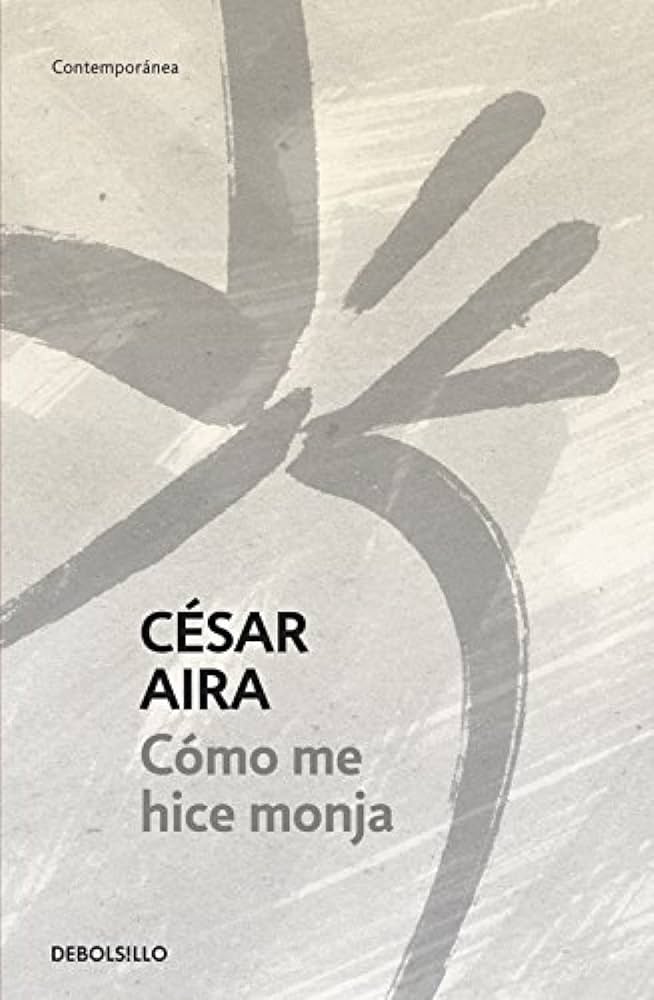
Examples of what Balakian describes abound in both Pizarnik’s and Aira’s works, particularly in the latter’s short novel, Cómo me hice monja (1993).
 While this is the case, Pizarnik’s and Aira’s connections to surrealist theories of how an image can be effective and the ways this might be achieved is not to say that either of these artists are surrealists. By the time either were producing their writing, surrealism in Europe largely had fallen out of favor, and the “first wave” of surrealism had also passed through Latin America. However, there was a second wave that crested. According to Melanie Nicholson, the surrealism of the 1950s and 1960s in Latin America “appeared as a form of new humanism” that seemed to offer ways of contending with a number of pervasive issues including “the lengthening shadow of the military (or militant populism) over civilian life, North American cultural, economic, and political imperialism, debt crises, widespread poverty, and social unrest in numerous forms” (136). Nicholson argues that Pizarnik can be situated at the latter end of this second wave, and, following Aira and others’ critical assessments, the poet shows congruities with surrealism. Specifically, Nicholson locates a distinct and unexpected parallel between Pizarnik’s poetic images and the surrealism of Europe with German visual artist Hans Bellmer (164-72), whose work would have been accessible to Pizarnik at the time which she was living in Paris, when she had gone there to study as a painter.
 Nicholson descries a link between Bellmer’s grotesque, sexualized dolls and mannequins, and the recurrence of such imagery in Pizarnik’s oeuvre. Poems featuring uncanny figures of dolls and mannequins into which the poet projects herself or otherwise uses as her doubles abound in Extracting the Stone of Madness. Furthermore, throughout her essays collected in A Tradition of Rupture, Pizarnik offers critical reflections on the works of undisputed European surrealist authors including André Breton and Antonin Artaud. Finally, in a number of the poems found in Extracting the Stone of Madness, she makes references to Lautréamont’s Les Chants de Maldoror (Lautremont, it is interesting to note, was born Isidore Lucien Ducasse in Montevideo, Uruguay). Maldoror (1869) is a work venerated by Breton and others as an ideal work of surrealism conceived prior to the movement’s existence.
Obviously, similarities among particulars do not necessarily mean those individuals ought to be grouped as members of the same family. Nicholson points out that this is a sticky matter among Latin American authors who seem to possess surrealist sensibilities, characterizing the movement as “an amorphous beast . . . [that] managed to adapt itself surprisingly well in certain new habitats.” Many influential Latin American poets of the era such as Octacio Paz, Enrique Molina, and Nicanor Parra have “at least one foot on the threshold of surrealism” (136). Like Pizarnik, even if he cannot be considered a surrealist in a hard and fast categorization, the force of the movement certainly is felt in Aira’s work.
César Aira was born in Coronel Pringles, Argentina, in 1949. Since then, he has proven himself to be incredibly prolific, publishing over a hundred books that include novels, short story collections, essays, criticism, and biographies. Some artists exult in the myth of the mercurial creator, which is ubiquitous in at least popular notions of the surrealists (one only need recall a few anecdotes regarding the life of Dalí), and a trace of this can be seen in Aira. According to a profile and interview conducted by Alejandro Chacoff, Aira was set to have his first novel published while he was a student at the University of Buenos Aires in 1969 and still quite young. On a whim, passing the building which housed the publisher during a walk with a friend, Aira decided to stop inside to inform the editor responsible for the manuscript that he had changed his mind and no longer wanted the novel published, simply to impress his friend. It would be a decade before Aira saw another of his novels published, and there is some disagreement as to whether it was a lack of funds, or a 1975 military coup in Argentina that caused further delay of his novel Moreira. In any case, it eventually appeared in 1980, and the work is “shot through with philosophical images and dreams” in which “one can already recognize the multifaceted and frenetically imaginative style” that Aira presents the reader throughout his novels (Chacoff, 2024).
Aira has published primarily through small presses in Argentina. His work is unabashedly avant-garde, despite his declared proclivity for what he dubs in an interview with María Moreno “conventional literature”. During the same interview, Moreno gestures to an essay written by Aira in which she paraphrases him as having claimed that he aligns himself “with an avant-garde that attempts to recuperate . . . invention” (68). Aira is rather known by interviewers for giving answers to questions that are evasive or extemporaneous. In important ways, his work is reflective of this penchant. Will H. Corral argues that one should think of Aira as an “exhibitionist of the creative act [who] reveals how unconscious mind processes can become a narrative” and quotes Michael Greenberg reporting the technique as being what Aira calls “La fuga hacia adelante,” which translates as “the flight forward” or “the escape forward.” It entails a composition practice that demands in his creative works “the story must move ahead, never backward, forcing him to come up with ever new ideas and plot twists” (286). Here, one cannot help but notice a parallel if not perfect symmetry with automatic writing so useful to the authors working within the movement of surrealism. Surely it would be possible to bring to light further connective tissues between Aira and surrealism by placing the former’s la fuga hacia adelante under a more powerful microscope; however, in Moreno’s interview with him, Aira says something that’s equally or more striking than the above—but, to fully appreciate it, one needs to return to Balakian’s analysis regarding the technical and theoretical aspects of how the French surrealists produced their poems.
Balakian in her discussion of the ideal surrealist image concludes that one important aspect of the “how” surrealist writers came to produce their work included a rejection of the abstraction of codifying the world into symbols—a move in the literary arts that had become prominent in works produced by the aptly named symbolists, the immediate successors to surrealism. Balakian tells us that the surrealist poets’ intent within language was quite different than, for example, Verlaine and Mallarmé. Between symbolists and surrealists, choices in vocabulary (and their choices in how language was deployed in general) diverged in pronounced ways both affectively and politically. Balakian explains that surrealists were interested in something much closer to an idea of literature as an active, participatory undertaking on the part of the poet as well as the reader; that “Language was to be endowed with a hallucinogenic quality” and that literary artists fundamentally should be “alerted to the sensations that words can produce much in the manner that the painter is attracted to objects, which mean a different thing to each artist, and speak a different language to each spectator.” In essence, “The surrealist poet in his use of words was approaching a painter’s technique”(144). Surely an example of a literary artist with “one foot on the threshold of surrealism,” Aira confesses to having a “fetish” for paper and pens of high quality, and then suggests that he is “showing off [his] frustrated vocation as a visual artist.” Aira explains that “writing bears a resemblance to drawing in the selection of materials, but, above all, because what I write always has a visual component. I make a kind of written drawing [italics in original] that disappears once it undergoes transformations” (70).
***
Surrealism as a movement was political in a broad sense of the term. It partially arose as a response to the hitherto unimaginable violence, and the efficiency of that violence, of World War I. There was a definite radicality behind its work, an avant-garde desire not only to produce something new, but to fundamentally shift the way individuals interact with and perceive the world around them. It is important to underscore that the surrealism which took root in Latin America was openly political in its response to the social and economic milieus of the countries where it found fallow ground. Here I turn to Gilles Deleuze.
 Deleuze’s conception of literature was political through and through, and there are ways of thinking about certain of Deleuze’s concepts that are compatible with the ideas that drove the creation of literary works openly associated with surrealism as a movement. But, as mentioned earlier, surrealism had lost its cachet in Europe by the time Deleuze had begun to theorize literature, and by and large, Deleuze passes over it when working through ideas such as “minor literature” and “stutter.” There is another reason, beyond surrealism’s having simply fallen out of favor, however, that Deleuze neither addresses at length the movement nor the works by authors who were making literary productions within it (notably excluding those authors who were associated and then left of their own accord or were expelled). It has to do with the fact that Deleuze’s overarching project rejects psychoanalysis, while surrealism was openly indebted to it, the latter to the degree that Breton, as a medical intern, was practicing psychiatry and psychotherapy on the wounded from the war, and even took a meeting with Sigmund Freud.
Deleuze mentions surrealism in one brief passage from his collection, Essays Critical and Clinical. In “To Have Done with Judgement,” Deleuze writes, “Groups that are deeply interested in dreams, like psychoanalysts and surrealists, are also quick to form tribunals that judge and punish in reality: a disgusting mania, frequent in dreamers” (130). Yet Deleuze’s work is deeply indebted to the writings of Antonin Artaud, who was expelled from the movement in 1927. Given this, it would be sensible to attempt to view Pizarnik’s and Aira’s work not only in their indebtedness and affinities to surrealism, but through the possibility of understanding them as minor writers, in much the same sense that Deleuze and his long-time collaborator Félix Guattari found Kafka to have produced a minor literature.
 First and foremost, to understand Pizarnik and Aira as practitioners of a minor literature is not to look at their works strictly through an academic lens, but to ask what it does. Deleuze and Guattari note that there are three characteristics of minor literatures: a high coefficient of deterritorialization in the use of language, that everything takes on a collective value in them, and that they are political through and through (16-17). This latter may seem at odds with Aira and Pizarnik, given that their works ostensibly bear no traces of political orientation, and attempting to allegorically read this into them would likely be a stretch. Corral notes that “Politics in general and national affairs in particular are absent or relegated in his prose” though some critics have attempted to suture Argentinian politics to Aira’s narratives, such as in Marcela Valdes’s “Unmanageable Realities” (289). Meanwhile, Susan Bassnett points out that Pizarnik had claimed to have no interest in politics, despite having circulated among leftists, particularly during her time in Paris. But the political is something that is impossible to sever from one’s life, and certainly in the production of one’s art, since the political permeates each decision one can make, particularly in a world that has been entirely captured by late capitalism, which has overshadowed the social facets of human existence including the political. What makes these authors works political is the deterritorialization they perform, how they “become,” and how they make language stutter, which is apparent even in the English translations.
Translation is a tricky thing—it is virtually impossible for readers who are unfamiliar with a work’s original language of composition to divine the degree of fidelity that a translator has held to the original without going through the onerous task of translating it themselves. This very point is key to understanding this writer’s approach to discussing Yvette Seigert’s and Chris Andrew’s respective translations of Pizarnik’s and Aira’s Extracting the Stone of Madness (first translated in 2016) and How I Became a Nun But given the content of both Pizarnik’s collected poems and Aira’s novel, and what can be gleaned from the few critical works available in English regarding their lives and oeuvres, it seems reasonable to discuss these works in relation to what they do in a Deleuzian sense, and, furthermore, what the translations of these representative works in the U.S. have to say about the politico-economic situation of publishing Latin American authors in the U.S.
First, this idea of deterritorialization. For Deleuze, life consists of assemblages, which constitute things as well as their circumstances and qualities. An example of an assemblage could be an onlooker in the Museo Nacional del Prado viewing the Bosch painting which opened this essay. The assemblage is the relationship of the painting to the museum, the relationship of the onlooker to the paining as well as to the museum, and it includes all those qualities and traits that make up the onlooker, the painting, and the museum as well. Not only can these concatenations be called an assemblage, but an assemblage is also a system of signs, as in language. A given system of signs possesses a sense of being territorialized, or is somewhat stable and static, if one were to intentionally isolate it in given moments or points as in the example above; but systems of signs can also be deterrittorialized. Language is deterritorialized in literary works that constitute minor literatures. Christa Albrecht-Crane explains that for Deleuze and Guattari, to speak and to write in grammatically acceptable terms means to submit to the societal laws of one’s culture, since conventional grammar expresses the appropriate and accepted means of expression. If members of a culture do not submit to such laws (either as a way of actively refusing such laws or because they somehow lack social skill and cultural power), they are defined as “out-laws”, as social misfits, as Other (144).
In the translations of Extracting the Stone of Madness and How I Became a Nun, language stutters and becomes evident as style. Throughout the poems collected in the former, language is destabilized, meaning is destabilized, and the reader is confronted with the act of translating the translation—translating what at times feels to be cascading images of pure affect. Trying to mine a meaning not simply experienced as an intensity within the body, as an expression of emotion resulting from the force of a collision of images, will likely be entirely unproductive, unless one is simply looking for repetitions in broad thematic elements and perhaps connections to Bosch. Honestly, even this may not yield much. For example, at one point in the long prose poem by which the Pizarnik/Seigert collection takes its title, Seigert translates Pizarnik as:
«You’ll come to me with a faint accent that evokes an open door, or
the shadow of a finely named bird, or the residue of shadow in my
memory, or the substance that lingers after they throw the young
woman’s ashes to the wind, or the trace lines on the page when
you erase the drawing of a house or a tree or a sun or an animal» (77).
 Meanwhile, in a poem that appears earlier in the collection titled “Fragments for Subduing the Silence,” Siegert translates Pizarnik’s speaker of the poem quite possibly broadcasting (in a figurative sense) something similar to Deleuze’s notions of style and stutter when she writes, “When the roof tiles blow away from the house of language, and / words no longer keep—that is when I speak” (53). But these are only two examples from a collection that exults in its deterritorializations; in many of her poems, Pizarnik makes the grammar of the poetic form stutter through wide variations in lineation and shape, which is apparent not only in the English, but also in the original Spanish appearing on the verso of each page.
Aira similarly causes the “grammar” of narrative itself to stutter in the novel How I Became a Nun. Aira’s novel is brief and the narrative does not eschew the kind of temporality that would be found in more conventional or realist works (save for the end, which finally destroys the coherence of the narrative altogether), but it significantly problematizes identity and how a reader might relate text to paratext—in this case the title to the story—since there never is a moment in which the narrator-protagonist becomes a nun or indicates that the events described in any way logically connect to such an idea. In fact, at the end of the novel, the reader is led to believe the narrator has died, been murdered, out of vengeance by an ice cream vendor’s widow. Who, then, is narrating this story? The genre certainly does not indicate that it is meant to be read as speculative in the way that horror, sci-fi, and fantasy are. The narrator is not a specter discussing what has led them to their current state of being. Yet Andrews translates the final line of the work as
“ . . . my brain, most loyal of my organs, kept working for a moment longer, just long enough for me to think that what was happening to me was death, real death . . .” (67).
 Well before this point, Aira inserts difficult questions about sex and identity in the work, as well as contradictions of fact. The title, and at first the narrative, set out to establish the narrator-protagonist to be a young girl, age six, describing herself as “a devoted daughter” (4), but, no more than three pages on, is called by their father “son” (7), and, later, is even identified as César Aira. No explanation is offered for these abrupt shifts. Reviewing the novel, Will H. Corral points out that throughout, it “alludes to Aira’s experiences” including school, radio culture, and his friendship with Argentine poet Arturo Carrera (54). Of course many novels are to some degree autobiographical, but there is much more here that is not. One fine example of stutter within the grammar of narrative, which cascades into a grand deterritorialization in Aira’s novel, occurs when the protagonist is taken by his/her mother to visit their imprisoned father. At the prison, the protagonist is identified as Aira, as a daughter, and the tenuous reality of the situation is riven. The protagonist enters the prison, which they associate with the hospital where they had convalesced after being poisoned by cyanide-laced ice cream, and gets lost inside, before deciding to remain, hidden. Each prisoner becomes the protagonist’s father and “reality . . . kept withdrawing at the speed of my desire to enter it.” The protagonist realizes they are an angel, which turns their existence into a dream, “but a real dream . . . reality becoming the real dream” though “the real dream turned dreamlike in turn, becoming the angel, or reality” (70-76).
These stutterings of language, these deterritorializations seen in Extracting the Stone of Madness and How I Became a Nun, instantiate becomings. This is because minor literature, or the minorization of literature, opens upon a becoming-other, which is necessarily political much the way the protagonist of How I Became a Nun realizes that every event prior to entering the prison is preparing them “to become the guardian angel of all the desperate men to discover what love really [is]” (74). It is also becoming-revolutionary, minor literature being actively political, insofar as it engages “in inventing a people.” According to Deleuze, minor literatures summon
“not exactly a people called upon to dominate the world. It is a minor people, eternally minor, taken up in a becoming-revolutionary. Perhaps it exists only in the atoms of the writer, a bastard people, inferior, dominated, always in becoming, always incomplete. Bastard no longer designates a familial state . . . This is the becoming of the writer” (4).
***
While works by Pizarnik and Aira have recently reached a much wider audience in the U.S. because of their translation and publication by New Directions (and in Pizarnik’s case, also Ugly Duckling Presse), one might question why it is that only recently these authors have become readily available in the States, considering their stature. There may be a number of reasons. It is certain that the publishing industry, as an instantiation of late capitalist economic forces, functions to commodify literature—and thus, in each case, it must make it into something that is desired, which can be a difficult thing, if the literature in question is experimental, radical—in short, minor—since it likely will be a challenging ware to sell. It stands to reason, then, works of translation that are experimental by nature will have more formidable odds in capturing a wide audience, since these works will be doubly unfamiliar to readers.
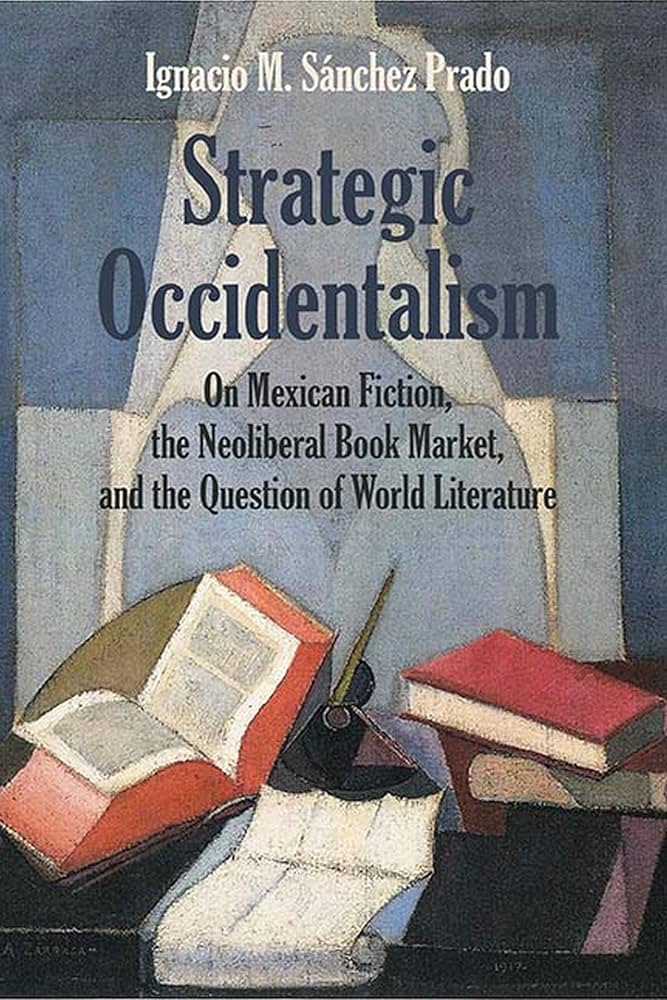
Speaking generally, the kinds of “capital” that may be at odds with the publication of works of translation extend beyond the purely economic. Ignacio Sánchez Prado points out that Spanish “lacks the cultural capital of French and German; it has also been displaced as a consequence of the geopolitical centrality acquired by Arabic and Chinese” (7). Prado argues that this is true in academia, and, extrapolating upon this, one can imagine how such a state of affairs ramifies or exists outside of the university, since values such as these are ideological and radiate from the organizing forces of the neoliberal marketplace. In the case of Pizarnik, works were published in the UK well before appearing in the U.S. Ben Bolig compares the work done by Cecilia Rossi and Susan Bassnett in their respective volumes of translation. These two take quite different approaches to Pizarnik. Rossi focuses more upon fidelity to the original poems, while Bassnett privileges her own creative acts (130). This does raise a question about how a minor literature might resonate in the hands of a translator that takes many liberties with a given work. Another aspect pointed out by Bolig is that the British representation of works from “Spanish America” is even less significant or sizeable than in the U.S.
While works of translation do not make a sizeable portion of its literary production, at given times in the 20th century translated works from certain regions of Latin America became well-known and well-received in the U.S. Summarizing Ángel Rama’s analysis of the elements that helped to generate the Latin American Boom that included authors such as Márquez and Vargas Llosa, Sánchez Prado offers one that is of particular interest here: “the flattening of Latin American writing into a single marketable product” (80). This point is key in thinking about the publication of Pizarnik and Aira today.
Sarah Pollack finds evidence that, similar to the success of Márquez in the 1960s, Roberto Bolaño’s oeuvre may have been a key factor in the translation and publication of a multitude of Latin American authors in the U.S. in the 21st century. Pollack, tracing the trajectory of Bolaño’s career—“his accretion of cultural capital in Spain and Latin America, his first translations and entrance into the literary field in the United States, the marketing of his works and biography”—proposes that the success of The Savage Detectives operated to codify Latin America as a “nostalgic space safeguarding the idealism of the 1970s, ripe with sexy, savage, Che Guevara-esque and beat-like adventurers waging uncompromising artistic and existential rebellions” (662).
 If this is an accurate assessment, then it would seem that Latin America as perceived by the US has once again undergone a “flattening” in the style that Sánchez Prado suggests occurred with Márquez’s magical realism—however, Pollack feels that perhaps this is too simple, and eventually acquiesces Bolaño’s intervention in literature has not caused “a single reification of the region and its literature that serves as a new ‘yardstick,’” by virtue that one can see other existing paradigms within Latin American literature, such as the Boom authors’ ongoing translations, as well as genre markets “that are not mutually exclusive” (663).
An important aspect to consider about Bolaño’s success beyond Latin America is how marketing has shifted since the Boom period. Bolaño wrote much about what he read, and some of these essays are available in translation under the title Between Parentheses (published by New Directions). With these, there is a virtual map of writers and works to translate, publish, and market, such is the mystique and interest that Bolaño has generated among readers. There is thus a readymade market, and it certainly is not a coincidence that translations of Pizarnik’s and Aira’s works are published by New Directions, the same publisher that released many of Bolaño’s. Pizarnik and Aira are two authors he appreciated a great deal. Nor is it likely coincidental that blurbs from Bolaño appear on the covers of Pizarnik’s collection, and that Chris Andrews, frequent translator of Bolaño’s work for New Directions, also translated How I Became a Nun for the same house.
What is evident in a cursory examination of the business of publishing, in the marketing and commodification of literature, and particularly works of Latin American literature currently being published in translation, is that the decisions of what to publish are primarily economic concerns. According to Leticia Vila-Sanjuán, historically the Big Five publishers have not placed much stock in works of translation, unless a given work is all but guaranteed to be a worldwide, commercial success (562). It is usually small and independent presses that consider translations; however, with the 2016 election in the US, there was a moment in which publishers began to reconsider their less-than inclusive catalogues of books (563). While this is the case, Vila-Sanjuán reports that “In terms of trends or books that have worked well in the U.S. . . . in recent years it seems like interests in fiction verge towards Latin American horror and social issues (political, narco-related, feminism), with a bit more attention than usual for poetry and classics, too” (568). Trends are anything but revolutionary. Is minoritarian literature presently enclosed in late capitalism? Even if this were the case, reading, writing, and translation remain fundamentally political, and sometimes as deterritorializations within the relations of power; reading and translation will still retain the possibility of producing “the catastrophe . . . where the fixed point governing the system’s behavior shifts from being a stable to an unstable attractor” (279), as the Bosch painting perhaps exemplifies.
Still, Bosch’s painting speaks, and its language has been interpreted as a critique of medical practices of the period; the limits of human knowledge; of morality, faith, and wisdom. There has been conjecture as to the nature of the work as well—whether Bosch was operating here in some sense as a documentarian, recording for posterity, perhaps à la Gonzo journalism, some event the artist was intentionally making his own, inserting himself into, so to speak. Each of these possibilities are reterritorializations, but it is the stutter of the image and it constituent parts that mattered for Pizarnik and perhaps Foucault, much as the stutter of Les Chants Maldoror spoke as a becoming for Breton and the French surrealists.
Translation is a tricky business—on the one hand, there is the work of deterritorializing a message from one language, and reterritorializing it within another, such that there is enough fidelity to the content of the original to argue the spirit of the thing remains. On the other hand, there is the literal business of translation which, in the neoliberal marketplace, demands work be of a monetizable value, whether that means an academic is creating scholarly works “translating” Bosch’s “Cutting the Stone” into new interpretations of the artist’s intent, or someone engages in transforming another writer’s work into a different language. However, neoliberalism is not without its faultiness and fissures. As we’ve seen, on occasion the stutter comes through. In the history of art and literature, it is the stutter that matters—in this case, the stutter of surrealism, instantiated as a becoming, in the works of Pizarik and Aira.
The echo of this stutter and others throughout Latin America will undoubtedly continue to be translated because revolutions begin small. Small as a discordant idea or image that can fit through the cracks in the marketplace. Perhaps with the outcome of the most recent presidential election in the U.S., we’ll see a similar phenomenon in the publication of translated works as what occurred in 2016. In any case, these works will continue to stutter through history.
John Kuligowski is currently a PhD student specializing in Creative Writing at the University of Georgia. He has served as assistant editor for volumes 392 and 394 of the Dictionary of Literary Biography, and his writing has appeared in Maudlin House, Misery Tourism, Foothill Poetry Journal, The Shoutflower, and The Chaffin Journal, among others.
Works Cited
Aira, César. How I Became a Nun. Translated by Chirs Andrews. New York: New Directions,
Albrecht-Crane, Christa. “Style, Stutter.” Gilles Deleuze Key Concepts: Second Edition. Edited by Charles J. Stivale. Montreal: McGill Queens University Press, 2011. Print.
Balakian, Anna. Surrealism: The Road to the Absolute. New York: E.P. Dutton & Co., Inc., 1970. Print.
Bassnett, Susan. “Speaking with Many Voices: The Poems of Alejandra Pizarnik.” Knives and Angels: Women Writers in Latin America. Edited by Susan Bassnet. London: Zed Books, Ltd., 1990. Print.
Bogue, Ronald. “Deleuze and Literature.” The Cambridge Companion to Deleuze. Edited byDaniel W. Smith and Henry Somers-Hall. Cambridge: Cambridge University Press, 2012. Print.
Bollig, Ben. “Recent English Translations of Poetry from Argentina: Contexts and Strategies.”Translation and Literature, vol. 25, no. 1, 2016, pp. 107-30. DOI: https://doi.org/10.3366/tal.2016.0239.
Corral, Will H. “César Aira (Argentina, 1949).” The Contemporary Spanish-American Novel: Bolaño and After. Edited by Will H. Corral and Nicholas Birns. New York: Bloomsbury, 2013. Print.
Corral, Will H. “Review: How I Became a Nun by César Aira and Chris Andrews.” World Literature Today, Vol. 81, No. 4, “Inside China” (Jul. – Aug., 2007), p. 54. JSTOR, https://www.jstor.org/stable/40159480.
Deleuze, Gilles. Deleuze, Gilles. “Literature and Life.” Essays Critical and Clinical. Translatedby Daniel W. Smith and Michael A. Greco. Minneapolis: University of Minnesota Press, 1997. Print.
Foucault, Michel. History of Madness. Edited by Jean Khalfa, translated by Jonathan Murphyand Jean Khalfa. New York: Routledge, 2009. Print.
Moreno, María. “César Aira.” BOMB , Winter, 2009, No. 106, 10th Anniversary Americas Issue (Winter, 2009), pp. 66-72. JSTOR, https://www.jstor.org/stable/40428235.
Nicholson, Melanie. Surrealism in Latin American Literature: Searching for Breton’s Ghost. New York: Palgrave MacMillan, 2013. Print.
Pizarnik, Alejandra. Extracting the Stone of Madness: Poems 1962-1972. Translated by Yvette Siegert. New York: New Directions, 2016. Print.
Pizarnik, Alejandra. A Tradition of Rupture: Selected Critical Writings. Translated by Cole Heinowitz. Brooklyn: Ugly Duckling Presse, 2019. Print.
Pollack, Sarah. “After Bolaño: Rethinking the Politics of Latin American Literature in Translation.” PMLA, vol. 12, no. 3, 2013, pp. 660-67. JSTOR, https://www.jstor.org/stable/23489303.
Sánchez Prado, Ignacio. Strategic Occidentalism: On Mexican Fiction, the Neoliberal Book Market, and the Question of World Literature. Evanston: Nothwestern University Press. Print.

 el roommate: colectivo de lectores
[celebrate] Xavier Franca, Barbara reacted to your message: