
Two Paths for the Whitexican Novel
Nicolás Medina Mora. América del Norte. USA: Soho Press, 2024. 480 pages
Valeria Luiselli. Lost Children Archive. USA: Knopf, 2019. 400 pages
[This essay was published first in Jeffrey Lawrence’s Substack page on May 9, 2025]
In late December, Jacobin published a bombshell review of the writer and journalist Nicolás Medina Mora’s debut novel América del Norte. The author of the review, Levi Vonk, accused the Mexican-born Medina Mora of using his novel to whitewash the crimes of his father, Eduardo Medina Mora, one of the main architects of the disastrous “drug war” initiated by former Mexican president Felipe Calderón in 2005. Vonk went on to insinuate that Medina Mora and his family are so powerful that even Latinos in the United States are afraid to criticize him in public. The review quickly went viral, and occasioned an online debate about race, power, and privilege in Mexico that was as intense as any I’ve witnessed in the Anglophone sphere since I began studying US-Latin American cultural relations two decades ago. Not yet having read América del Norte myself, I initially sided with those who saw Vonk’s takedown as politically and intellectually justified. But as I made my way through the novel, and as I reflected further on information about Medina Mora that I already possessed, my views changed significantly. What had seemed at first a reasoned if impassioned argument now struck me as an ad hominem attack, one that left out key facts that would complicate Vonk’s account of the content of América del Norte and Medina Mora’s status in the US publishing world.
I share several of Vonk’s qualms about América del Norte, a coming-of-age story about a privileged, light-skinned Mexican intellectual who seeks to assimilate to the US cultural elite. I agree that the novel fails to register the continuities between the political agenda of Trump and the reactionary National Action Party (PAN) to which the Medina Mora family and their imaginative counterparts belong, and I think Vonk is right to characterize Medina Mora’s use of autofiction in the novel as an effort to strategically divest himself of responsibility for the consequences of his family’s actions in the real world. There is something slippery about populating a novel with contemporary political figures like Trump, Calderón, and former Mexican president Andrés Manuel López Obrador (AMLO) while at the same insisting, as Medina Mora does in a prefatory note, that “All the characters in this novel—especially the real ones—are imaginary.” That sounds a lot like having one’s autofictional cake and eating it too.
Yet Vonk also makes a series of claims so misleading as to verge on journalistic malpractice. The review is riddled with factual errors and half-truths, and it relies on an enormous amount of selective evidence. His distortions run the gamut from minor mistakes of reading comprehension, such as implying that Medina Mora’s fictional double Sebastián adopts the moniker of “Whitexican” (he doesn’t; he goes to great lengths to define himself as a “creole”) to outright fabrications regarding the novel’s aims. One of these is Vonk’s assertion that Medina Mora’s fixation on his protagonist’s status as “not quite white” prevents him from “reflecting soberly upon the stolen wealth that made his elite formation possible.” The illegitimacy of Sebastián’s “colonial” heritage is in fact a central theme of the novel. At one point, while debating whether the University of Iowa’s policy of requiring English-language tests for international students enrolled in the MFA in English is “racist” (a not unreasonable supposition), Sebastián qualifies the statement by literally checking his privilege: “The position I occupied in Mexico was closer to that of Dutch Afrikaners than that of Black South Africans.” It’s hard for me to imagine a more clear-eyed admission of Sebastián’s unearned racial, economic, and political advantages in his home country.
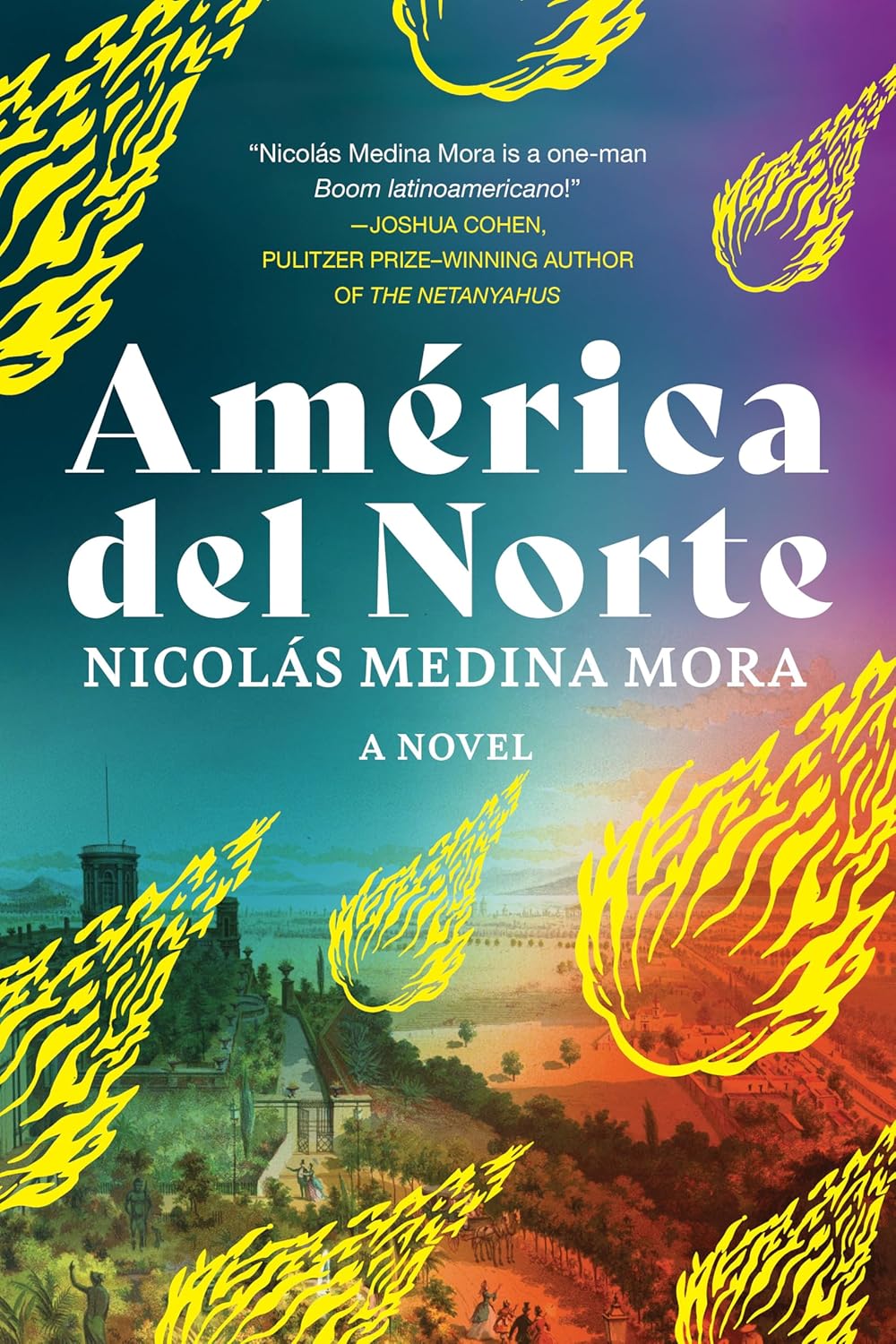 Even more concerning than the review’s inaccuracies, however, is how Vonk blithely declares that América del Norte “should never have existed,” while at the same time appropriating its primary argument, namely, that the US liberal establishment willfully ignores the class and race divisions within Mexico itself. Medina Mora’s novel is not perfect, and I sympathize with Vonk’s frustration at the extent to which its encyclopedic style often steers us away from the concrete mechanics of Sebastián’s father’s involvement in the Calderón administration. Yet América del Norte also contains one of the most unflinching depictions of US–Latin American racial politics I’ve read in any English-language novel published in the past decade. Medina Mora may not detail the specifics of his family history, but his candor about the privilege, power, and access he has enjoyed as a child of the Mexican elite is both compelling and daring—daring precisely because he opens himself to attacks like Vonks. I can’t fault Vonk entirely for seizing that opening, but I do wish he’d been able to set aside his personal animosity toward Medina Mora to give a more honest and judicious account of the issues he raises. For what’s ultimately at stake here is not the culpability of this particular “scion of the Mexican right,” but of a US cultural system that rewards a handful of ultra-privileged Mexicans (and other Latin Americans) for telling us stories about how precarious they are. In reaping the rewards of this corrupt system, Medina Mora is far from the only—or even the guiltiest—culprit.
Medina Mora’s novel is worth reading precisely because he places these perverse cultural dynamics at the heart of the narrative. América del Norte gives the lie to a foundational untruth of the contemporary liberal establishment—the belief that, in Medina Mora’s words, “all Mexicans, even those of unmixed European ancestry, [are] metaphysically brown.” The novel’s singular feature is Sebastián’s ab initio refusal, as a light-skinned wealthy Latin American, to allow the American elite to define him in subaltern terms. And its most successful plot line is the one that follows Sebastián’s repeated confrontations with gringo identity essentialism through the famed MFA program at the University of Iowa and the hipster cultural environment of New York. One place that Medina Mora puts these clashes to good dramatic use is in the uneasy friendship that Sebastián forms in the early days of his MFA program with a working-class Chicana named Mayeli. American-style race reductionism is the force that thrusts Sebastián and Mayeli together; a white classmate introduces them when Sebastián arrives at Iowa because they are “both Mexican.” Yet the enormous class gulf between them almost immediately puts pressure on their relationship. Sebastián guiltily withholds his background from Mayeli, and, not unreasonably, she begins to see his failure to disclose it as a form of aggression toward her (“But he’s wealthy,” he overhears her saying to a friend at a party). Such scenes are revelatory not only for their acute diagnosis of Americans’ misguided attempts to tether ideas of identity-based discrimination to national origin, but also for their frank depiction of how absurd such attempts appear to anyone with knowledge of the internal hierarchies of Mexico. When Sebastián visits Mayeli’s hometown in rural Mississippi and meets her undocumented parents, his speech, mannerisms, and dress irreversibly give him away: “the[y] immediately recognized me for who I was.”
América del Norte’s relentless avowal of internal difference within the Mexican diaspora in the United States undermines Vonk’s assertion that, in the novel’s depiction of Sebastián’s trajectory following the 2016 election of Donald Trump, “what Medina Mora previously criticized uninformed gringos for—collapsing the category of ‘Mexican’ into brownness, precarity, and undocumented status—is the very thing he turns toward to portray himself as a victim.” Sebastián does portray himself as a victim of Trump, and the novel does lose energy when he uses Trump’s victory to shore up his own cultural position (Mexico’s elites are bad, but Trump is worse). But a failure in perspective on one issue does not entail a failure in perspective on all issues, and the subsequent 300 pages of América del Norte contain multiple scenes that meaningfully elucidate the past and present of US–Mexican racial, economic, and political divisions. The passage that perhaps best illuminates Sebastián’s underlying attitude on these issues comes in the penultimate chapter. After confessing that, before the Trump election, “I went through life as a near-perfect facsimile of a white American of my gender and class,” Sebastián claims to now recognize that his mistake was thinking he was as privileged as his white American peers. Vonk interprets moments like this as “opportunities” for Medina Mora to “call himself a victim.” I interpret them as attempts to grapple with the entrenched power hierarchies that span the Americas. When Sebastián proceeds to define privilege on the next page as “a measure of vulnerability to history,” he concludes that “no one is immune—not even those favored by the draw.” That he arrives at this conclusion while dealing with the uncertain status of his visa extension clarifies the stakes of his position. He’s not denying that he’s privileged in relation to poor Mexicans (or Mexican Americans). He’s saying that Americans of a similar background are more privileged than he. Vonk may find that a dubious endpoint, but it is in keeping with the novel’s extended meditation on how little the North American liberal establishment understands about class, race, and citizenship privilege in the US–Mexico context.
Vonk’s propensity to exaggerate his claims about Medina Mora’s novel coincides with his propensity to exaggerate his claims about Medina Mora’s standing in the US literary world. Like Vonk, I first read América del Norte through the prism of my personal relationship to its author. In 2022, I moderated a panel in which Medina Mora participated, and afterward we began to exchange occasional emails. In the summer of 2023, when I was visiting Mexico City, we had a long conversation over coffee about our respective work—I, too, was about to publish an autofictional novel in my second language (in my case, Spanish). We’re not exactly friends, but we’re friendly, and we have friends in common. I mention this neither to avow nor disavow any personal loyalty to Medina Mora—my arguments here should speak for themselves—but rather to disclose my access to specific back-channel information that casts doubt on Vonk’s portrayal of Medina Mora as the “it” writer in the US.
Having published widely in legacy magazines such as The New York Times, The Atlantic, The New York Review of Books, and The Nation, Medina Mora certainly has significant standing in US media circles. Yet a single point of information about América del Norte suffices to demolish Vonk’s thesis that the “publishing industry” has designated Medina Mora as its “Great Mexico Knower.” When the novel went out on submission, every single major publisher in the US that received the manuscript passed on it. While I have not discussed the circumstances surrounding the publication with Medina Mora himself, his decision to release the novel with Soho Press, a relatively small indie publisher, was almost certainly due to his inability to secure a contract with a bigger house. This is not a knock against independent publishers or Medina Mora himself. It merely attests to the fact that, contrary to Vonk’s repeated declarations that US-based publications “defer to [Medina Mora] as a Great Mexico Knower,” mainstream publishers had little appetite for his self-reflexive novel about the race and class advantages of the Mexican elite.
Why does Vonk inflate Medina Mora’s status in US publishing so egregiously? I imagine one reason is that if he were represent Medina Mora’s position honestly, to acknowledge that the object of his critique is at once the son of a powerful politician in Mexico and a journalist who failed to secure a permanent visa to remain in the United States, it would be more difficult to justify his righteous outrage. Another reason is that his singular focus on Medina Mora allows Vonk to avoid taking on the Mexico-born English-language writer who has the real power in US publishing: Valeria Luiselli.
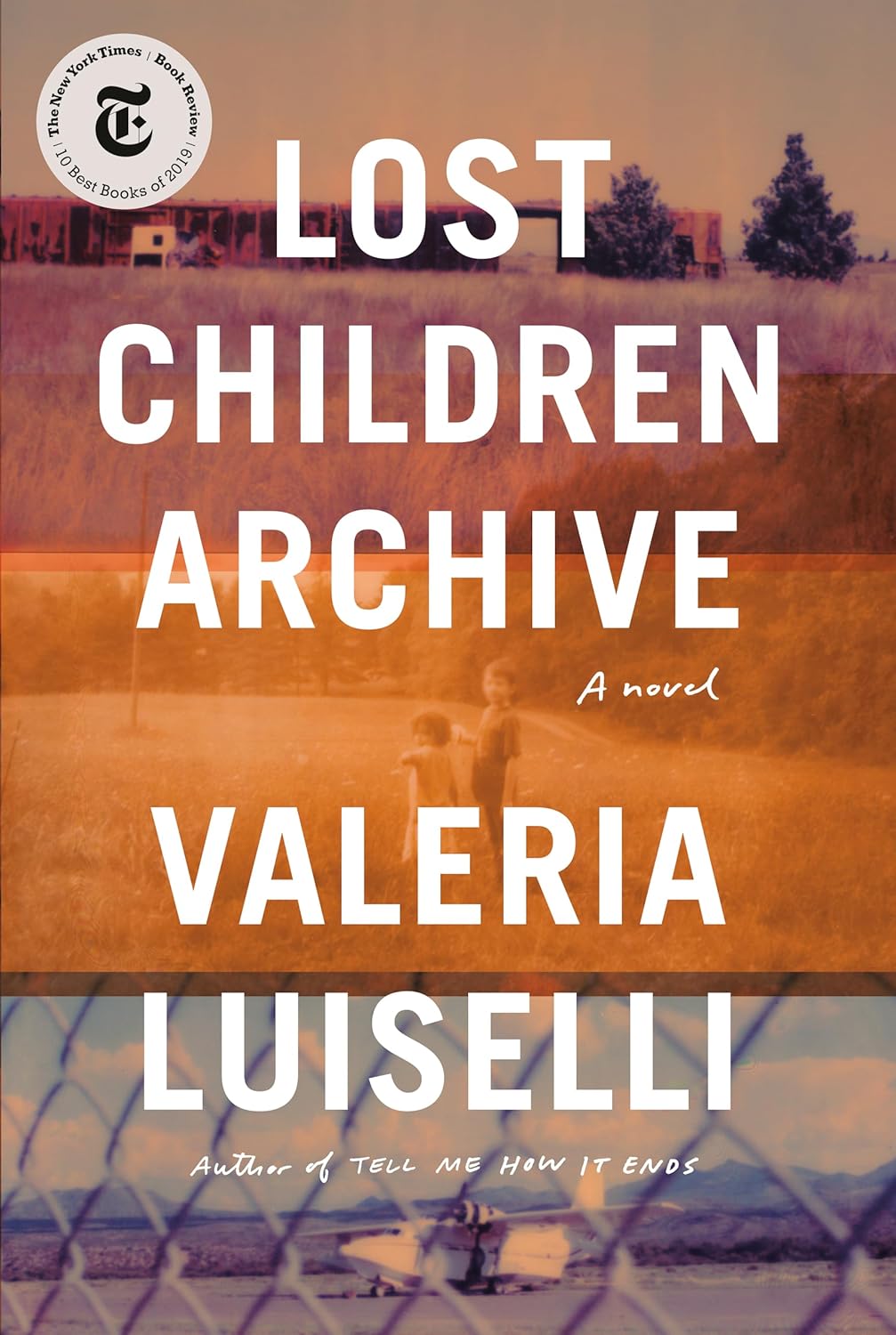 From a cynically strategic standpoint, Vonk’s decision to target Medina Mora rather than Luiselli makes perfect sense. Luiselli teaches at Harvard; Medina Mora is an editor at a declining legacy magazine in Mexico. Luiselli’s works have received almost universal acclaim; Medina Mora’s novel got a measured review in the New York Times, and that was about it. If you’re worried about being an “enemy” of Nicolás Medina Mora (as Vonk claims to have been), then you certainly don’t want to be on the wrong side of Valeria Luiselli. However, if Vonk’s concern had really been to blow the lid off the “elite capture” of Mexican identity politics in the US publishing industry, Luiselli would have been a far more consequential target than Medina Mora. Although Luiselli’s most famous work, Lost Children Archive, differs substantially from América del Norte at the level of style, the two novels bear some striking resemblances. Like América del Norte, Lost Children Archive was the first English-language novel of a Mexican-born writer. Like América del Norte, it centers on the traumas of violence, racism, and xenophobia wrought by the imbalances of US–Mexican relations—what Luiselli’s narrator refers to at one point as a “hemispheric war…that goes back decades.” And, like Medina Mora’s novel, Luiselli’s traces the relational arc of a troubled cross-cultural couple, one born in Mexico, the other in the US, who struggle to make their relationship work amidst the rising tide of xenophobia in (US)American life. The main difference between América del Norte and Lost Children Archive is that while Medina Mora’s narrator directly confronts his privilege and access as a child of the Mexican elite, Luiselli’s autofictional avatar converts her avoidance of that fact into a literary aesthetic.
One of the only glimpses we get of the narrator’s family history in Lost Children Archive occurs midway through the novel, when she recounts to the reader that “my mother left us—my father, my sister, and me—to join a guerrilla movement in southern Mexico” and that, subsequently, “we moved to Nigeria for my father’s work.” The autobiographical impulse behind these lines is clear and deliberate. As reported in the New York Times profile that coincided with the release of Lost Children Archive, Luiselli’s real-life mother left her husband to join the insurgent Zapatista movement in 1994, and she has spoken elsewhere about her father’s career as a diplomat in sub-Saharan Africa (in real life, he was the Mexican ambassador to South Africa). Yet, as far as I can tell, not a single mainstream English-language outlet has noted that the person who appointed her father to his diplomatic post was Carlos Salinas de Gortari, the president who introduced neoliberal policies into Mexico in the late 1980s and 1990s to disastrous effect. To be fair, Luiselli’s father caused nowhere near the level of harm of Eduardo Medina Mora. Yet without a doubt, it was her father’s role as a well-placed representative of Salinas’s Institutional Revolutionary Party (PRI) that permitted Luiselli the material and symbolic capital to become bilingual, to pursue her literary studies in English, and to prepare herself for an international career in the arts. I disclose this information not to blame Luiselli for her past, but rather to demonstrate how similar her biography is to Medina Mora’s, and how much more meticulously she eschews the less seemly parts of that biography in Lost Children Archive. In the New York Times profile, Luiselli is quoted as saying, “I come from a matriarchal line of women who have always been very involved politically and socially,” a sentiment the novel’s passing reference to her mother reinforces. What the statement and her novel both conveniently omit is her father’s political and social involvement—not as a revolutionary, but as a high-ranking official in the administration that waged a low-intensity war against the Zapatistas for years.
It would not be hyperbolic to say that the overarching literary strategy in Lost Children Archive is to highlight Luiselli’s real-life progressive chops—most notably, her experience as a volunteer translator in immigration court, which she related to signficant acclaim in her 2017 nonfiction book Tell Me How It Ends—while simultaneously sanitizing those aspects of her personal history that would draw attention to her elite background. A further variation on this can be seen in her construction of the narrator’s husband in the novel, a white American academic whose research on the Apache peoples motivates the couple’s road trip from New York City to the edge of the US-Mexico border. The year before Luiselli published Lost Children Archive, her former husband, Álvaro Enrigue, published his own autofictional novel in Spanish, Ahora me rindo y eso es todo, which intertwines a historical drama about the Apaches with a winding journey with his wife Valeria to document their passage through the US Southwest (the book was dedicated to Luiselli). To my knowledge, no US publication made the obvious connection between the two novels when Lost Children Archive came out, and in a sense, there’s no reason they should have—there’s nothing particularly notable about an author fictionalizing a person close to them. Yet the effect of Luiselli´s repurposing of Enrigue, a Mexico-born Spanish-language novelist, is to reinforce Lost Children Archive’s cascading moral logic, wherein Americans have all the privileges (and thus are coded white, male, and monolingual) and Central Americans and Mexicans (who are coded brown, female, and Spanish-speaking or bilingual) lack them.
All of this autofictional revealing and concealing (to use Vonk’s term) gives Lost Children Archive’s oft-cited meditations on the limits of empathy a curiously abstracted feel. In one of the key passages early in the novel, the narrator wonders whether she should feel guilty about telling the story of the Central American migrant children, and runs through a series of “political,” “ethical,” and “pragmatic” concerns about her actions. Tellingly, none of these concerns has anything to do with her economic or racial difference from the migrant children. The narrator’s gravest fear is about “mak[ing] art with someone else’s suffering,” a moral qualm she associates with “cultural appropriation” and the worry, “who am I to tell the story?”
When I taught Lost Children Archive to my undergraduate students at Rutgers last year, I found myself in the position of defending the narrator based on what was actually on the page. A number of my students felt there was something amiss in the narrator’s relationship to the migrant children—though, in the absence of any overt class markers, they identified the simple act of “appropriation” as the narrator’s major offense. My own misgivings about Luiselli’s novel, I came to realize after the discussion, were unconnected with what her narrator did or did not do with the stories of the “lost children.” My problem was that the class guilt that clearly motivated Luiselli herself had been excised from the text, leaving the reader to supply a rationale where none was actually given. I suspect this helps explain why most critics have tiptoed around the narrator’s status, preferring to gently chastise Lost Children Archive (when they criticize it at all) in the novel’s own airy terms, as when James Wood wonders what to make of the fact that both the narrator and her children “perform…the brutal hardships of those less fortunate.” To reintroduce the missing piece of the puzzle, to say that the real motive for the narrator’s apprehensions is her author’s class guilt, is to risk falling into—and being accused of falling into—an attack on the person rather than the text. Yet here I think Vonk has a point. If one of the signature features of contemporary autofiction is to simultaneously gesture toward and disavow the link between author and character/narrator, the critic must be granted the ability to reconstruct and analyze that link (and I say this as someone who has published an autofictional novel).
It is Vonk’s very attunement to the interplay between fiction and reality in América del Norte that makes me believe his failure to mention Luiselli is motivated rather than incidental. For, as Vonk surely can’t have missed, Medina Mora anticipates several of Vonk’s sharpest critiques of the Whitexican manipulation of US identity politics through an elaborate set-piece on Andrea de Olivares, a “New-York based conceptual poet” obviously modeled on Luiselli (she is subsequently described as having “recently become America’s favorite Mexican writer”). The portrait of Olivares deliberately alludes to Medina Mora and Luiselli’s similarities in background: “Both of our fathers had been ambassadors, both of us had gone to school abroad, both of us had enjoyed the encouragement of literary luminaries whose interest in nurturing our precocious gifts had nothing whatsoever to do with their friendship with our parents.” The cutting tone of the line’s last clause reveals in a single stroke those aspects of Luiselli’s background that few in the US publishing world would dare say out loud: that her literary status, like Medina Mora’s own, has always depended on her access to the gatekeepers of the cultural and publishing world.
It is a significant strength of América del Norte that, when Olivares herself comes onto the scene, during a public reading in the Iowa-city bookstore Prairie Lights, the novel does not simply reproduce the public discourse of the real-life Luiselli. Instead, Medina Mora envisions an alternate version of his famous contemporary, one who candidly acknowledges the privileges that one senses Medina Mora wishes Luiselli would divulge. The section concludes with a poignant monologue in which Olivares explains to an African American student who asks how she identifies that she (Olivares) does not consider herself to be a writer of color. By admitting that “the kinda awkward truth is that I’m actually a white lady. A white lady from Mexico,” the fictionalized Luiselli abruptly drops the pretense of racialized vulnerability that the audience expects of her—she confesses, as Vonk seems to believe Medina Mora has not confessed, that she is a Whitexican through and through. At the same time, the reader remains attuned to the fact that Olivares removes the mask precisely to perform the cross-racial solidarity that the narrator himself has never successfully produced. Olivares proves adept at instantiating the “good” version of Whitexicanness, which is another way of saying that she knows how to gracefully acknowledge her privilege while continuing to enjoy its benefits. In this instance, the fictional departure serves Medina Mora well. In veering away from the contours of the real-life author at the last moment, he suggests that the true culprit here is not Valeria Luiselli or Nicolás Medina as individuals, but the contradictions of the US cultural system that creates such contradictory expectations for their work. Here, ironically, he and Vonk agree.
So how do Vonk, Medina Mora and Luiselli speak to that broader system and the way it platforms and positions those who write about Mexico? It seems to me that Vonk’s most significant contribution in his review of América del Norte is his clear and compelling claim that, though Medina Morena has been able to “pass” as a progressive when writing for venues such as n+1 and The Nation, he retains his ties in Mexico to institutions aligned with the PAN and the PRI. This is true—and América del Norte makes no attempt to hide it. In the acknowledgements section of the novel, Medina Mora thanks the Nexos magazine staff headed by Héctor Aguilar Camín, an anti-Left ideologue who staunchly backed the conservative coalition candidate Xóchitl Gálvez in Mexico’s 2024 presidential elections, for teaching him “everything I know about Mexico.” I agree with Vonk that if Medina Mora engaged in similar practices in the US context, it’s likely that none of the progressive outlets that regularly publish his work would have gone anywhere near it.
Nevertheless, I’m less certain than Vonk about the lesson we should derive from Medina Mora’s self-positioning. On the one hand, I believe that Medina Mora could have been more explicit about his ideological affiliations in Mexico when writing in the US prior to the novel’s publication, and n+1 also has some accounting to do for elevating Medina Mora as its Mexico specialist without (I assume) fully comprehending the political bent of Nexos, where he is currently employed as a senior editor. Yet to my mind, the issue here is primarily one of transparency. It’s not evident to me that Medina Mora, a gifted journalist who knows a tremendous amount about Mexico and writes eloquently in English, should be barred from all US-based liberal/left publications because he holds views that don’t entirely align with my own. The fact that Vonk openly admits that he sent an email telling Medina Mora he “admired his work” demonstrates that the political divides in play are far messier than Vonk later purports them to be.
Furthermore, while it may be true that Medina Mora skillfully camouflaged his political connections in the US media as he rose within its ranks, he absolutely let the cat out of the bag when he published América del Norte. The final chapters of the novel incorporate an essay on AMLO that compares the former president to the proto-fascist Mexican intellectual-cum-politician José Vasconcelos, and Sebastián concludes, in the days leading up to AMLO’s historic election in 2018, that “if the Left wins the election, it will probably fail.” That the narrator goes on to say that “part of me wants to hope otherwise, even if my family must pay” might indeed indicate some bad faith on the part of the real-life author, but the ideological ambivalence that he expresses in this moment is far from uninteresting as fictional praxis. Nor was I unmoved by the fact that the narrator has just acknowledged that he sees all of the political projects associated with his right-wing family—NAFTA, the drug war, the conservative victory that ended one-party rule in Mexico in 2000—as failures, too. Say what we want to say about the Medina Mora family, this mode of soul-searching is exactly what one would and should expect from a complicated literary protagonist.
Vonk himself wears his political commitments on his sleeve, and for anyone who has followed Jacobin’s recent coverage of Mexican politics, his sources are hard to miss. During the past year, Jacobin’s own resident Great Mexico Knower, the gringo expat Kurt Hackbarth, has churned out a steady series of articles that ventriloquize, almost verbatim, the main talking points of Morena’s governing coalition. As heated debates about AMLO’s and Sheinbaum’s policies have raged across the Mexican Left, Hackbarth (and by extension Jacobin) has adopted the role of dutiful attack dog. Criticisms of the growing militarization of the federal police, the controversial judicial reforms passed during AMLO’s lame-duck presidency, the ongoing environmental degradation caused by the Tren Maya—all are dismissed as right-wing fever dreams. As for the estimated 151,000 homicides that occurred during AMLO’s 6-year term of office, which most reports put slightly higher than those of his predecessor, Enrique Peña Nieto? Hackbarth writes: “While AMLO’s administration ultimately succeeded in modestly reducing stubborn homicide totals, the nation is far from pacified, with rates remaining frustratingly high.” Such palpable double-talk helps nobody, and it says something disturbing about Jacobin’s editorial process that statements like these are allowed to stand. The headlines attached to Hackbarth’s recent pieces—“AMLO’s War on Neoliberal Corruption,” “Who’s Afraid of Mexican Democracy?,” “Claudia Sheinbaum’s Victory Is a Triumph for Mexico”—attest to the extent to which partisan fealty rather than evidence-based argumentation motivates his political analysis.
Vonk has learned that lesson well. Not only does he emulate Hackbarth’s disregard for nuance or objectivity (“I make no attempt to cloak myself in impartiality”); he also pulls directly from Hackbarth’s playbook in evaluating all things related to Mexico based on whether they are for or against AMLO. As someone who is ideologically closer to Vonk than to Medina Mora, I have no issue with him criticizing the latter as “anti-AMLO.” The problem is that Vonk makes that criticism his definitive criterion for judging the aesthetic merit of the novel, such that the text itself becomes at best an afterthought and at worst an impediment. When Vonk asserts that “it is never mentioned [in América del Norte] that the masses might be embracing AMLO with such fervor because, during his presidency, his party reversed a number of policies Medina Mora Sr’s family was responsible for,” he is deliberately misleading. This is the exact rationale for AMLO’s rise that Sebastián gives over and over in the novel; it’s just that he, unlike Vonk, believes the fervor over AMLO is misguided. And here it’s worth mentioning that, despite AMLO’s undeniable popularity, the cult of personality that surrounds him has been a topic of strenuous debate on the Mexican left since he emerged onto the scene over two decades ago.
This brings us finally to Luiselli. As one might assume given my analysis above, her engagements with Mexico’s contemporary political situation are sparser and more indirect than Vonk’s or Medina Mora’s. In a 2020 interview with The Guardian following the publication of Lost Children Archive, she said of Mexico, “I see it from afar with worry and with pain, and with love,” suggesting a reasonable reluctance to engage with the nitty-gritty of Mexican politics having lived in the United States for so long. Yet my own sense is that this distance also affords Luiselli a convenient alibi for defining her relationship to Mexicanness to a liberal US readership that has little awareness of Mexico’s complex political, economic, and racial terrain. Consider, for instance, her 2018 New York Times op-ed on the Trump administration’s policies toward undocumented Latinos in the US. After opening with an anecdote about her daughter’s fears about identifying as a Mexican in the leadup to the 2016 elections, Luiselli immediately goes on the assert that Trump’s victory had heralded “a new America…where Hispanic children would be in serious danger.” While there’s no reason to doubt the veracity of her daughter’s anxieties at the time (one would suppose they were very real), I find it hard to fathom why one would route an argument about the dangers of the undocumented through the experiences of an affluent, bilingual, US-born child.
I remember reading Luiselli’s op-ed when it first appeared and being shocked by her failure to make a single distinction between her daughter and the “Dreamers,” the “Central American minors,” or the “Hispanic immigrant children” who visit her in her “19th-century house.” If Luiselli’s reference to an undifferentiated “Hispanic” population was already outdated then, it has aged very poorly in a political context in which, as Geraldo Cadava has pointed out again and again, there has never been more ideological, geographical, and economic divergence among Latinos in the United States. Rereading Luiselli’s op-ed in light of Vonk’s review made me marvel even more at how, with a few exceptions, Luiselli has largely avoided the kind of scrutiny in the US about her race and class politics that Vonk directs at América del Norte. The overwhelming majority of US-based critics have characterized the ending of Lost Children Archive as a means of establishing a hard-won insight into the nature of solidarity. By “visiting the terrors that refugee children routinely face upon [the narrator’s] children—our children, as they have come to feel in the novel,” writes Parul Sehgal, Luiselli “dramatizes what it takes for people to stare hard at their own families, to examine their complicity in other people’s suffering.” My own reading of the novel, however, aligns with that of David Kurnick, who sees the two children’s “bizarre” escape into the desert “to become voluntary refugees” as a plot device engineered to allow “middle-class characters [to] inhabit a geopolitical crisis as a kind of ethical thrill ride.” In this sense, as Kurnick argues, Lost Children Archive hews far closer to the “liberal moral gymnastics” of Jeanine Cummins’ notorious potboiler American Dirt than the latter’s detractors care to admit.
América del Norte steadfastly refuses its reader such liberal gymnastics. Sebastián is pedantic, insecure, and long-winded—and at times he also seems racist, classist, and misogynistic. If literary fiction were a likeability contest, the narrator of Lost Children Archive would undoubtedly win. But fiction cannot be reduced to a moral litmus test, and, in América del Norte’s best moments, the very qualities that make Sebastián and his family so unpleasant are precisely those that give the novel its eloquence and depth.
In the weeks since Trump assumed the presidency and issued a series of executive orders targeting undocumented immigrants in the United States, the cultural question of who gets to speak for vulnerable Mexican populations—and how, and where—has taken on new urgency. The last time Trump was in power, the Academy of Motion Picture Arts and Sciences responded by awarding the Oscar to two Whitexican directors in a row: Guillermo del Toro for The Shape of Water in 2017 and Alfonso Cuarón for Roma in 2018. In interviews with the US media, Cuarón described Roma as an “autobiographical” film that rendered tribute to the “surrogate mother” who cared for him as an upper-middle-class child growing up in Mexico City and “[ended up] becoming a part of our family.” Although a number of critics argued that Roma served as an exposé of the class and race discrimination suffered by Cleo, the indigenous domestic worker at the heart of the film, Diego Salazar’s review in Foreign Policy gave a more convincing account of its underlying ethos: “The story of Cuarón’s nanny remains trapped in the filmmaker’s halcyonic memory of his muchacha, a child’s gaze, as though the adult Cuarón has learned nothing of her context or gained nothing of his own understanding of how her vulnerability was the price paid for his security.” As if to bolster this latter interpretation, Cuarón himself spoke of the film as an homage to the real-life model for Cleo, Libo Rodríguez, and posed for a photo for Variety magazine in which the two are shown in a loving embrace. I can’t think of an image that better exemplifies the US media’s predilection for narratives about Mexico that paper over the country’s starkest divides.
On January 23rd of this year, three days after Trump’s inauguration, the Academy once again responded by celebrating a film about Mexico. In awarding thirteen nominations to Emilia Pérez, a freewheeling musical about the Mexican drug cartels made in France with mostly non-Mexican stars, the Academy’s members finally revealed the real game the US liberal establishment has been playing all along. As the critic Alonso Díaz de la Vega has written, French director Jacques Audiard’s decision to cast two US Latinas (Selena Gomez and Zoe Saldaña) and a Spanish woman (Karla Sofía Gascón) as the main characters in the film “swaps out the identities of those who should tell this story with the presence of those who will appeal to his audience.” Díaz de la Vega is right to call this representational slight-of-hand “symptomatic” of the French film industry, but it also seems clear from Audiard’s selections of Gomez and Saldaña that the viewing public he most had in mind was Hollywood itself. He was betting that the Academy voters either wouldn’t know or wouldn’t care about the difference between Mexicans, Spaniards, Dominican Americans, and Mexican Americans–and he was absolutely correct in that assumption. It took a groundswell of outrage from Mexican audiences, a steady stream of negative reviews in the Spanish-language press (along with a few pointed critiques in the US media), and a series of distasteful tweets by the film’s lead actress for the momentum to finally turn on Emilia Pérez.
Is América del Norte the solution to the controversy surrounding Emilia Pérez? Of course not. But to simply dismiss its diagnosis of the US liberal establishment’s bad faith toward Mexico as another form of bad faith is to return us to the vicious circle of purity politics that progressives on this side of the Rio Bravo desperately need to break. In my view, one of the great challenges for novelists in the second Trump era will be to avoid creating alternatives to the world we inhabit that merely project the best versions of ourselves. I’m glad that Vonk had the audacity to reveal the inconvenient truths that Medina Mora left out of América del Norte. I just wish he’d been able to appreciate how many truths remain.
Jeffrey Lawrence is associate professor of English at Rutgers University-New Brunswick, where he teaches 20th- and 21st-century US and Latin American literature. He is the author of Anxieties of Experience: The Literatures of the Americas from Whitman to Bolaño (Oxford, 2018) and the translator of Sergio Chejfec’s Forgotten Manuscript (Charco Press, 2023) and Andrés Neuman’s How to Travel Without Seeing: Dispatches from the New Latin America (Restless Books, 2016). His debut novel, El americano, appeared with Chatos Inhumanos press in 2024. For El Roommate he has written about the works of Marta Aponte Alsina , Oswaldo Zavala and Francisco Carrillo among many other writers.

 el roommate: colectivo de lectores
Un comentario sobre “Jeffrey Lawrence writes an essay about Nicolás Medina Mora’s ‘América del Norte’ and Valeria Luiselli’s ‘Lost Children Archive’ (México/USA)”